Springtime for Palantir
My thoughts on Palantir and the NHS.
I do not hate Palantir. They employ some smart people, and they have done some good work in various places. They’re almost certainly worth engaging on projects across the UK public sector. I have written a lot of data connector in my time, and take a weird delight in them. I would probably enjoy working there.
My view is as an informed IT professional with no health care experience. I’m starting from the assumption that if the NHS struggles with IT tasks that are routine to Tesco (itself not a model of efficiency), then we need to look at how the NHS differs from Tesco (or Walmart or Amazon or Barclays). We would expect improvement to lie in catching up with other organisations, not in innovating as if its problems are unprecedented. Here I’m going to wander between musing on that, critiquing Palantir, and talking about existing solutions I've found through Google.
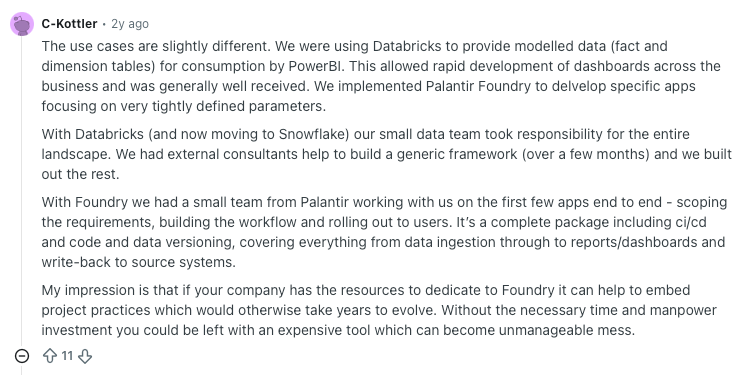
I have been unable to find a normal review of Foundry. Or buying guides that compare Foundry and other systems. As a result I will be using anonymous Reddit comments quite often. That's not what I'd like, but if Palantir want something different they'll have to give a review copy to PCMag like Tableau 🙂
This essay is rambling. I'm sorry. The argument for Palantir goes from a defence of The West, to Foundry is analytics system but also a data bridge but also an operational platform but also an app store and makes tea. And the argument against goes from raging about fascism to just not wanting to double-key data. Any attempt to be fair just becomes a ramble.
If you take one from these thousands of words, let it be that our national healthcare IT procurement policy should reflect the hundreds of countries in which it is not headline news because it just more or less works. Not an extension of US identity politics.
Why NHS IT sucks
I don’t think Palantir should be the core of the NHS system because I don’t think their engagement breaks with the NHS’s previous expensive failures, which stem from the management issues that originally created its fragmented data estate.
The NHS is not a single coherently managed thing. There are many trusts, many providers, and dramatically different levels of sophistication. (Generally a bit lower than you’d want as there’s little pressure to improve and UK gov salaries are low.) No-one can fine a family GP for poor data interoperability, and the BMA would probably be hysterical if someone tried.
Changing any of this would require a sustained and politically fraught effort by Ministers with real support from MPs and the Civil Service. It is unlikely they would be thanked for this, and any benefits would mostly come long after they had left.
And so every few decades there is a Ministerial top-down initiative to Fix All The Things. That’s a lot of budget, so complex distributional coalitions inside and outside the State form around that money. After a while it disappoints, collects bad press, and is orphaned. A process probably better understood in the context of The Rise and Decline of Nations, than any enterprise architecture book.
Dominic Cummings is our nation’s chronicler of decision making dysfunction; I can add little to what he’s written, except to say that sadly San Francisco start-up culture (in my opinion) does not break with those dysfunctions to anywhere near the degree he assumes.
The NSA already has your X-Rays.
But I’d like to start with dismissing sovereignty. Maybe someone at Palantir will go and download the STI status of every MoD employee in UK aerospace procurement, but it must be said if the NSA doesn’t have this data already, it’s because of the aforementioned fragmented data estate, e.g. because the NHS doesn’t have that data in a useable form itself.
The cost of building an NHS computing estate genuinely secure from the US (or Chinese) security establishment will never be acceptable.
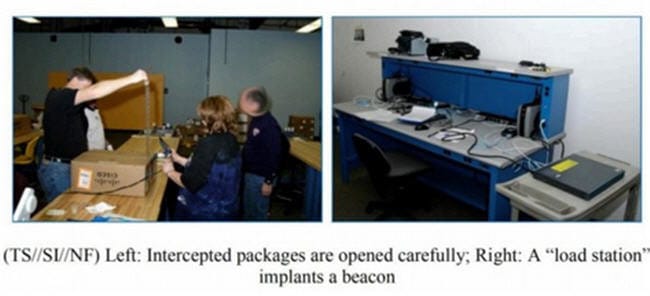
I, for one, would rather worry about the outdated copies of Windows in every clinic and the widespread use of WhatsApp. The NSA has your X-rays, can probably read your heartbeat off your Whoop band right now, and if for some reason they couldn't, rest assured the UK gov would just give it to them anyway ¯\_(ツ)_/¯
A false dawn.
The true risk is that Palantir is far more politically adept than other “consultingware” suppliers. No small Twitter account will make accusations of being against “Western civilisation” for not wanting to buy Business Objects or Microsoft SQL Server 😀 There are no newspaper articles trumpeting the thousands of lives small Excel studies almost certainly save every year. That exacerbates the main issue with every NHS IT overhaul: false hope.
The benefits touted for a fully Palantirised NHS are largely those of having a single information space for a large heterogenous organisation that’s easy for end users to contribute to. That’s not a bad thing, but the NHS’s current IT is based on buying off-the-shelf health management systems. An effort to join all those systems back into Foundry probably exceeds the effort of writing a single health care management system for the NHS. Which is effectively what you’d be doing as everyone will need to mirror bi-directionally into the FDP.
A single system is not a terrible national goal, but politically it requires big changes to the NHS before it can be done. Brazil has a single locally developed health management system, Estonia has their own, and a lot of Africa+LATAM are on DHIS2 which is open source. It is not impossible, but it would be a huge change. Particularly when GPs are legally speaking, no more a part of the NHS than my own freelance company.
The FDP is just a database.
I also have some particular points about the FDP as described by Tom Bartlett. (Thank you for the articles!) A lot of this will presume that you’ve read them.
Frankly a lot of the statements in Part 3 baffle me. I feel the author is blurring a lot of concepts to be able go “yes, I concede that, i am reasonable, however Foundry also...”. But honestly I could do much the same to justify doing everything inside Sharepoint and Excel.
For example, “What a warehouse cannot do at all is host actions”. That’s because it is not the role of that system to do so. Actions in the sense that Foundry uses that term are representable in any data warehouse since they are just another data item. That’s a very standard, see any Martin Fowler book. Most business modelling frameworks have a concept of an Action.
In a data warehouse they just get flattened into relational tables. Identical data, different view for different purposes. There’s no mystery here. Data warehouses don’t have business logic coded into them, because they’re intended to gather up data from multiple applications with different (possibly incompatible) logic. You don't want them to action things and send out emails.
There’s a lot of ontologically questionable statements like that. Charitably I see it making an argument for a single information system that might not perfect at everything, but is unified and flexible. But I think it overstates Foundry’s uniqueness and overplays the difficulty of conventional approaches.
Foundry is (as far as I understand) at its core an object database that consumes various source through data connectors. A lot of them run as periodic batches like any ETL [extract-transform-load] system. It’s a good architecture to support the use cases Palantir originally specialised in. But is just one of many approaches. It's not really challenging the separation between transaction processing and analytics, nor is it unusual in claiming that it is.
To continue, linking behaviour into data with objects as Foundry does isn’t new. An incredible amount of work has been done on this over decades. Arguably half a century! There is a vast body of work around business entity modelling. See all the Martin Fowler / ThoughtWorks books, and endless discussions by communities working on Enterprise Resource Planning and business modelling systems.
The issue with combining behaviour into the data layer across systems has always been inter-operability. Everyone’s Electronic Patient Record [EPR] system that’s able to handle running a hospital now needs to not only agree on a sub-set of data formats, but it also valid behaviours for all the entities they will share. My business rules of a clinical discharge need to be the same as the FDP, or at the very least a super-set of them that won’t cause inconsistencies. This is why behaviour is deliberately excluded from the data layer.
Because of this it isn’t clear to me that FDP “writeback” by existing systems is going to work better than the existing NHS Spine. The Spine simply requires different platforms in the NHS to exchange well-defined XML formatted data. Something that’s very well-established technology, and done successfully all the time in finance and logistics. And as almost everyone in the UK knows, works poorly in the NHS due to a lack of vendor support. As Part 3 says “the constraint on writing data back into the EPR is not technical but commercial.” Well, yes.
Currently the Spine doesn’t work that well because vendors are unmotivated to format their data properly into the required XML templates. I do not see them failing in that, and then carrying out the far more challenging task of establishing a real-time bi-directional link with a stateful proprietary object database. Something that will be harder for vendors to do.
Also as far as I can tell, Foundry is only transactional over the operations (or Actions) its own Ontology models permits, so these EPR systems are going to mirror the FDP (or just have access to special skeleton Action that makes arbitrary changes).
As it is, there is no commercial support for the FDP, so NHS workers are just double-keying data from existing systems. Which may explain its unpopularity more than the politics of the company!
(I’m enthusiastic about the Spine moving to HL7 FHIR, because it’s a US government mandated standard so vendors will actually implement it!)
Foundry’s Ontology model looks like pretty normal business domain modelling. There’s nothing bad about it, and there’s nothing particularly special either. It’s very similar to Apache Causeway, or Django REST. Or the ones embedded in the enterprise resource planning system, like Odoo or ERPNext, that quietly run the global economy. (The data spaces and forking functionality are interesting, but I’m not convinced they are that useful in established organisations.)
The best public sector precedent I can think of for a conceptually similar system is the (very successful) Irish benefits overhaul, that was done with the fledgling Naked Objects framework in 2002 (!). Direct object modelling of everything with fully customisable data views.
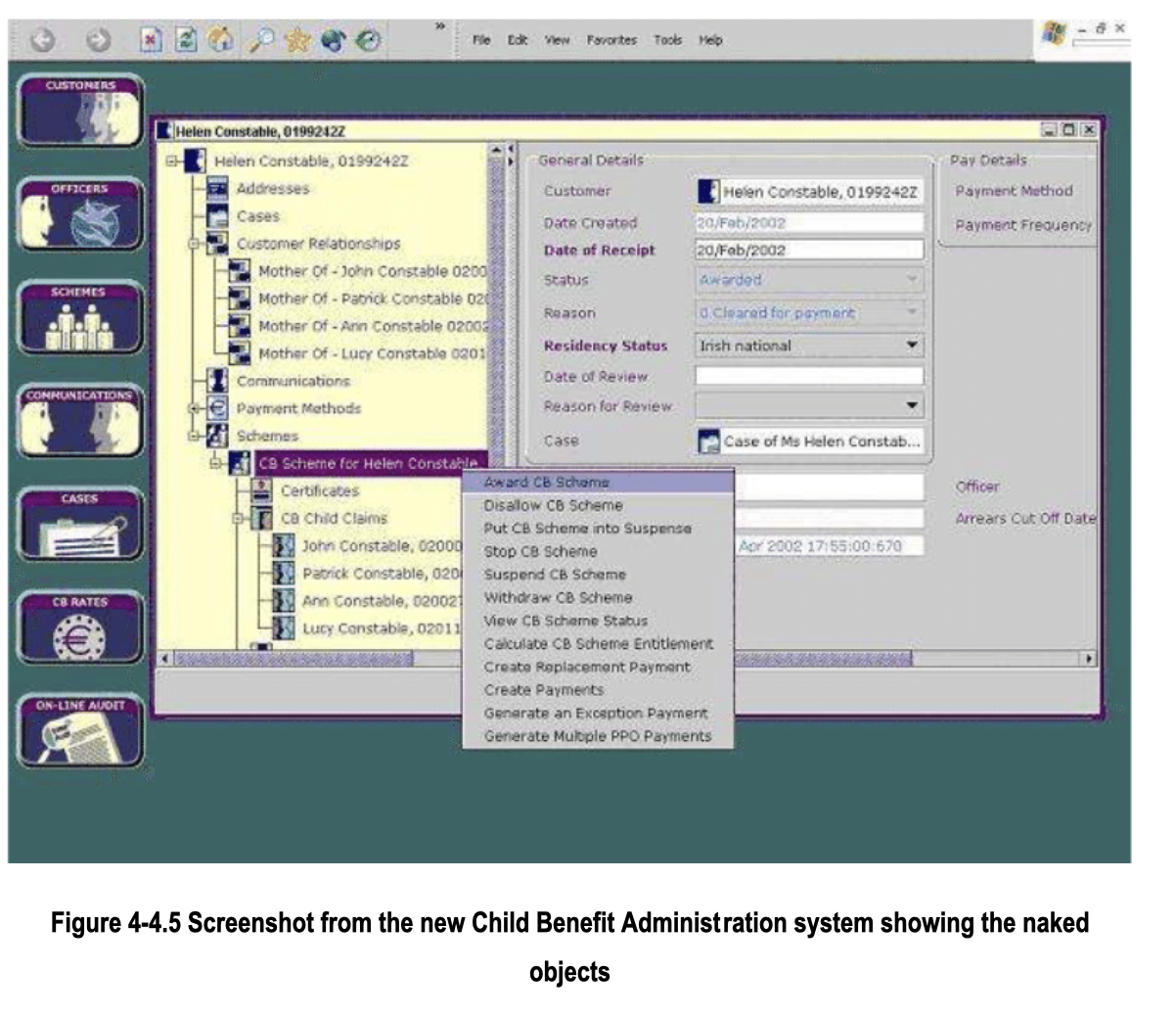
But note this was a complete system, not a “bridge” between more complex models. And that’s what the FDP would need to be, since it’s presumably not meant to expand into a full health care management system.
Our eternal war on Excel.
Turning to the case for Foundry as a replacement for end-user computing. Yes, people using spreadsheets is a problem. Yes, people keeping critical care data on whiteboards is bad. But you can make space for this with Sharepoint or a dozen other platforms. (I hear good things about Baserow.) Ultimately ad-hoc end user computing will always be with us. The problem is when something intended for 20 people turns into 20,000 users without anyone managing that. But the problem is the lack of management.
And it does have to be managed, the 20 user app is a very different beast to a well-designed 20,000 person critical app. How does a custom radiology app that needs to run through gigabytes of CAT scans fit into Foundry? What happens to all the other apps performance when it does? If I define a new Ontology and set of behaviours that fall into an infinite loop, will they affect the other FDP users?
There’s little reason to think FDP has solved this better than decades old (imperfect) platforms. These problems get very involved when numbers get large. That’s where visual builder tools typically fall down, and why software developers still have jobs!
There’s plenty of no/low-code frameworks. The non-existence of such technology is not the problem. Visual app builder tools have been with us for a very very long time. They just haven’t been suitable for creating more complex applications.
From what I can tell from the very limited documentation available, any third-party app that does much more than creating and managing records would need to have its advanced functionality hosted outside of Foundry and get connected back through an API anyway.
The Azure straw-man in the Computer Weekly articles feels contrived. Yes, if you do everything from scratch and try to use cloud components as logical building blocks, it will be hard, but no-one in a well functioning organisation does that. You slot a module into what you have, otherwise, yes, indeed everything would be very expensive and slow.
For example. If a hospital uses DHIS2 you can make a new health record module with just a few files, and the WHO has maintained a “solutions exchange” of these for years. EPIC has Smart Forms and Oracle Health has Power Forms.
There’s even an emerging app standard across health management systems called SMART-on-FHIR, which is already good enough to support a complex pneumonia treatment tool that’s saved over a 100 lives.
There is also Power Apps or Baserow Apps or Airtable (and more), although they come with the same disadvantage of being external to the core health management system.
Platform Economics
If Foundry truly solves all the issues it claims, that would be revolutionary. A true mass product that can, and should be implemented by almost any organisation. So why is Palantir’s client base mostly governments and a few very large corporates? Why is it always sold packaged with consultancy? Could it be that Foundry is too powerful to risk falling into Russian Chinese Iranian hands? Are they, as patriots to the West, choosing to work only with the most critical institutions of our world order?
Or does it actually require large numbers of people to spin the plates in the background, while not hugely improving on what already exists on the open market? My money would be on the latter.
Ultimately, Tableau has amazing visualisations, the ability to call back into operations systems from its dashboards, and an AI powered semantic, one might say ontological, information integration layer. And despite all the sophistication, there's a free version and I can just buy a small business license. (And, yes, you could say "But Foundry also does X!", but you always can 🤷)
Part 5 compares to iOS and Android saying that FDP Solution Exchange applications are no more tied to Palantir than a mobile app is to its operating system. I think this a poor comparison and also a worrying one. Switching mobile operating systems is predictable and bounded cost, especially since these are endpoint devices, not core business systems. Both those platforms are also highly standardised and used by billions of people. Android is even open source. There are multiple non-Google distributions of Android. (I would celebrate the NHS adopting GrapheneOS 😏)
If Foundry becomes the core of the NHS, then the NHS will be (I guess) around 98% of global Foundry end-users. In addition, NHS providers will need to go on Palantir training courses, get Palantir certification, and so on. (Or they might just ignore the FDP.)
For NHS apps that rely on Foundry, even the UX code will need to written to specific Foundry coding tools and APIs. They even seem to have their own dialect of Python in there.
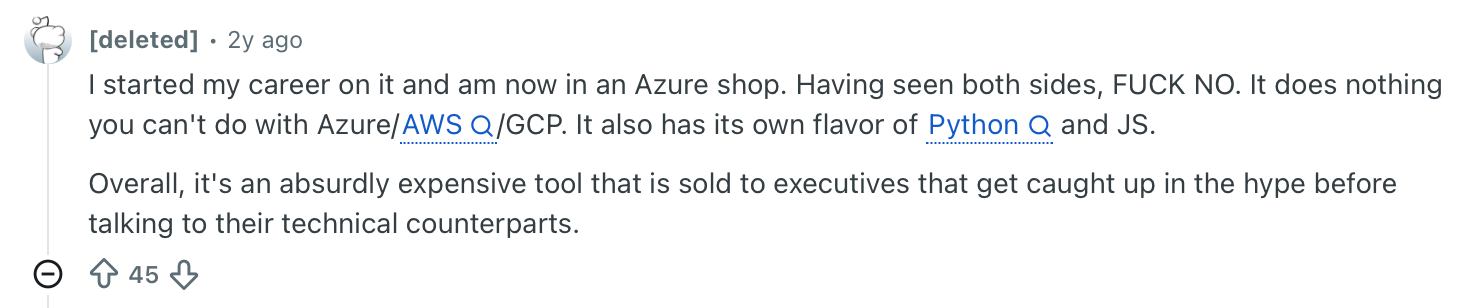
This means retraining everyone, and the NHS not being able to bring in external developers without doing so. But no-one will do this, because the data lives in the NHS’s existing commercial EPR systems. There’s no reason to move that data into the FDP, and so an NHS Foundry app wouldn’t have anything to work against…
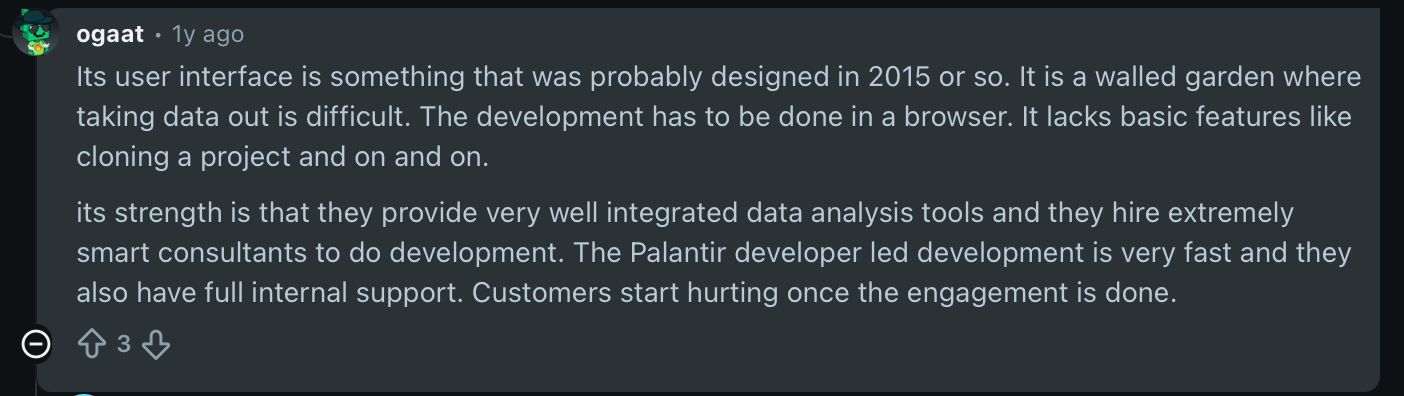
If the argument is that the NHS shouldn’t build a platform like this itself, I completely agree. But the argument against that is very much the same argument against the NHS adopting a proprietary platform of which it would be (by user count) the almost sole customer. (If the government did successfully force the hundreds of separate bodies in the NHS to adopt it.)
Standardising into Palantir seems particularly odd when other options for complex interoperable health apps seem to be quite advanced and widely used. (Admittedly, not with a few clicks reuse.) A cynic might think Palantir looked at all of this when making their pitch, and just partially re-implemented bits that were already known to work well somewhere else…
Coming back to the quote in this FT article that the Palantir Foundry offering was “not terrible software — it’s powerful in certain contexts — but it’s not revolutionary.” And that’s always been my impression of most of Palantir’s software.
Consultingware 101
Ultimately, the raison d'être of a lot of consulting-ware companies is to go into backward organisations to sell basic analytics and data capabilities as proprietary magic. This is not the worst thing. At least the light eventually shines in.
And it allows the buyer org to get a lot of custom development work done without HR or procurement rules! Consulting-ware shops do often hire very capable people, and that work will be valuable.
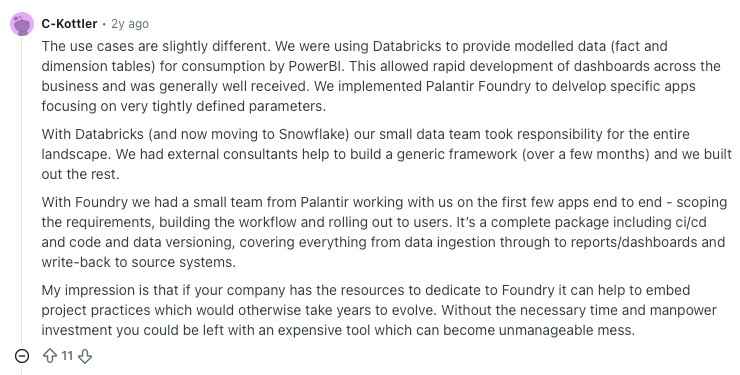
Even the aggressive politics is not a new thing; Palantir would have to work hard to reach the level of Machiavellianism of some Oracle lobbyists… And they do have some interesting products. Their aircraft logistics platform Skywise is anecdotally quite good.
What is to be done.
The NHS Common Data Model looks like a step forward. I just don’t see how it will work better through the FDP than through the Spine, or how it will be forced through a vast archipelago of NHS health service providers without some iron.
If you don’t need it, you don’t need an alternative :)
Tom Bartlett asks us “name me an alternative platform”. The NHS doesn’t need another platform. It really doesn’t. It needs to catch up with Citigroup or Tesco in 2007. Many trusts have.
Instead.
- Fix the spine. Fire vendors, fire staff, bully people as necessary, but get them to correctly use the Spine that is there.
- Spread best practices across NHS trusts. The Eastern England Secure Data Environment looks excellent! It seems like Manchester's Data Environment was good enough to serve as an example of what the FDP could deliver! Enforce security standards.
- Pay more. Someone should see moving from Google to the NHS as a promotion. UK gov shouldn’t be sneaking contract work into software deals in 2026. The NHS competes for talent with finance and Silicon Valley.
- If NHS Trusts want to pay for Palantir through their normal budgets, I think that's fine. I can't dismiss any of their products entirely, and all of them have some fans. Some trusts are using the little FDP tools, I don't think we should disrupt them.
Perhaps there’s an advantage to having some common data ledgers across the NHS to coordinate access to resources between trusts. I would suggest those are best built by NHS Digital with a little help from contractors, maybe get in some people from Ocado 🙂
Two (but genuine) Cheers for Palantir
I can’t bring myself to hate Foundry. I like a lot of systems that very similar to it. The whole Digital Twin, business-as-code thing, sings to my heart. I've had a look through the initial Palantir Learn course, and they don't tell me much about how it works technically, but it is a beautiful vision (even if they insist on renaming things).
But with my head if I wanted to do operations planning modelling at a FTSE100 company, let alone the entire health system, I’d want a standard data warehouse connected to MatLab.
Even normal people have a sense of disappointment in how IT has worked out over the last decades. Everything was meant to be beautiful, and yet whenever we login in at work, it somehow feels like a mess. Airport security guards yearn for the Single Pane of Glass, imagine how their management feels?
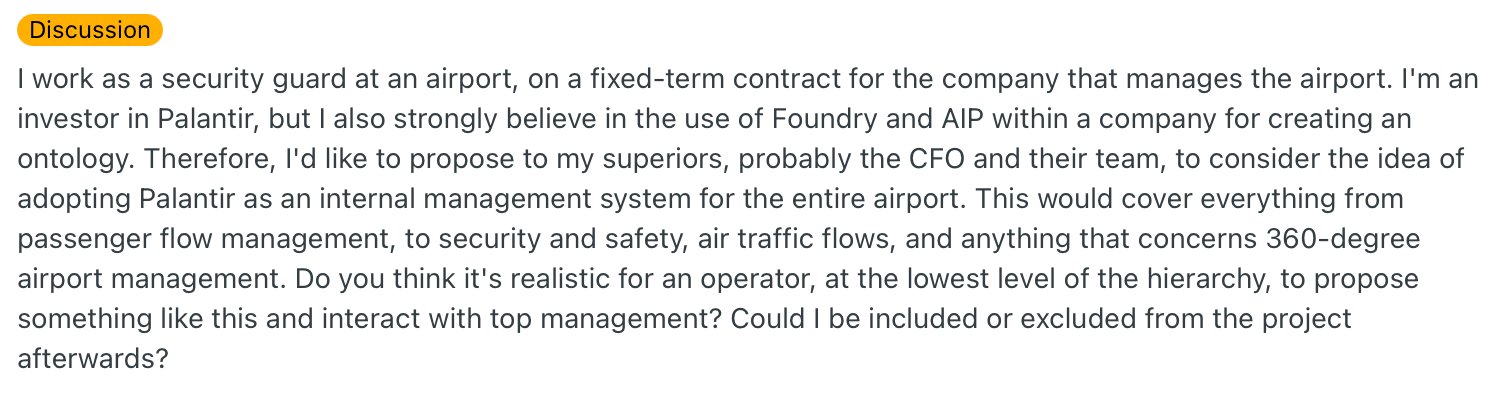
If I was coming back from a dusty village in Afghanistan to my field base feeling utterly confused that nothing in the briefing is actually really how things work, I can completely understand how Foundry (well, Gotham, but that looks like Foundry was extracted from Gotham) could be perfect.
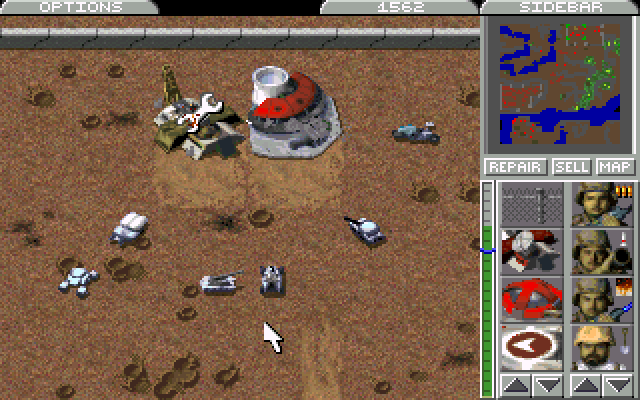
I can get on my laptop and just start throwing together a little model, share it with my neighbouring commanders and develop it out over time. I can start with an entity that’s just BigMan, and weeks later have a shared database showing Merchants, TaxiDrivers, Judges, Sheiks, etc, with little lines between them showing who’s friends with who, who’s buying what from where. It would be great!
The latest versions let you call in AI-managed drone strikes. Amazing! I just don’t feel that’s the environment the NHS operates in 😄
They are not assembling strike teams, they aren’t dealing heroically with unprecedented intelligence situations, they’re running boring systems that already exist, tackling problems that have been largely stable for decades, they need reliable inter-system messaging with HL7 standards, they need a way for patients to login once across the whole NHS data estate, they need secure data analysis environments with tools analysts already know, standardised interfaces for medical devices, etc. Palantir is a distraction from that.
But this isn't Palantir’s fault. Yes, they’re political, but it’s just part of their marketing, which is exceptional. Against online disinformation when Biden was president. Now they're Team MAGA. In 6 months, they’ll delete all the references to “The West” from their website, and be at the forefront of the US/China AI partnership 🙂
They play "The Game" hard. Even if their proprietary stack is meh, their consulting and business analysis skills are reportedly great. They have an amazing talent bench. The UK government should poach lots of their staff!
Watch their videos. Palantir is absolutely on point in every single one. Presentation, business focus, nice UI for everything. The messaging on flexibility, decision making, breaking out, etc is consistent in everything.
They clearly even do their forward deployed engineers hair before shoots 🤩

And their marketing is boosted by quick high impact pro-bono project delivered competently under stress during crises. The whole image is impressive.
Just look at the production quality on this!
You just watch it and want to support Labour Together, the Heritage Foundation, hunt down illegal migrants, oppose Russia China Russia, and put your kids in NATO run NGO projects all at once!
“Buying is an activity understood by economists. Shopping is a phenomenon of interest to anthropologists and sociologists.”
― Marc Gobé, Emotional Branding
Aura and parting thoughts.
They auramaxx exquisitely 🤌 I admire them for it! If you dislike that aura, I might suggest to you that protesting them as some sort of anti-christ is only going to make them stronger. It is Palantir’s job to do this.
It’s leadership’s job not to be too sucked in. It’s all our jobs to elect more capable MPs and Ministers. Palantir should be a data tooling and consulting supplier. One of many. Being hated by The Canary, or protested by activist nurses, does not magically make Palantir a solution.
Ask yourself sincerely, how many senior Ministers and Civil Servants involved in this decision making know what a database index is, or R, or a UML diagram, or that DHIS2 exists? In a sense, should they?
They know that Palantir is on their side against the Blob/Rightwing Extremism/etc, that it did amazing work for the country during Covid, that the NHS just seems slightly confused and hapless, and that they might get a job in California with them after leaving government with the next outgoing PM 🇬🇧🚀
Palantir spokesmen like Louis Mosley have a point. Everyone sipping cappuccinos in a Western hub city owes their safety to people who do what they would likely not. We are all tainted by Capitalism (the fruits of which I am very grateful). My DJI drone is part of a supply chain that slaughters terrified 40 something men in trenches. Isreal buys pistachios from Iran. The natural gas heating Whitehall subsidises Putin.
Tech has never been pure. Oracle was CIA funded. Everyone has defence contracts. The less asked about IBM's early history the better.
Morally perhaps, we should grant Palantir the grace we grant ourselves every day. But if we're going to take politics out of supplier evaluation, we need to take it all out. And Palantir themselves (trading at a P/E ratio of 120-250 !) do seem keen to avoid that for some reason.
Because we get asked a lot.
— Palantir (@PalantirTech) April 18, 2026
The Technological Republic, in brief.
1. Silicon Valley owes a moral debt to the country that made its rise possible. The engineering elite of Silicon Valley has an affirmative obligation to participate in the defense of the nation.
2. We must rebel…
It was genuinely hard to find technical commentary on Foundry under the weight of (sometimes a little unhinged) political commentary about Palantir, its founders, and Peter Thiel. And to this day, neither PCMag (or anyone) appear to have been able to write an independent review of Foundry as a piece of software ¯\_(ツ)_/¯
Perhaps the best case for Palantir in the NHS is that it is as evil as people say, but I don’t think we’ll get that lucky 😃
You get the Palantir Foundry license. It's just a box with a hard-copy of ignored NHS core data policies who's implementation you "back burnered" a decade ago, and 52 pages of private MSN Messenger DMs from when you were 17 🤣
— thomasoncrypto.eth || Web3 since 2015 (@thomasoncrypto) May 29, 2026